



Imagine a junior credit analyst who used to spend hours examining financial statements, questioning unusual ratios and learning why apparently healthy businesses sometimes default. Now, an AI assistant prepares the initial analysis, highlights risks and drafts the recommendation. The analyst reviews the output, corrects a few details and moves on to the next case.
The team processes more applications. Reports arrive faster. Senior managers see the productivity improvement they were promised.
But consider what happens six months later, when a borrower presents an unusual financial structure the AI has misunderstood. The analyst must decide whether the recommendation is wrong. They have reviewed hundreds of AI-generated reports, but have they developed the judgment to recognize a mistake that looks entirely plausible?
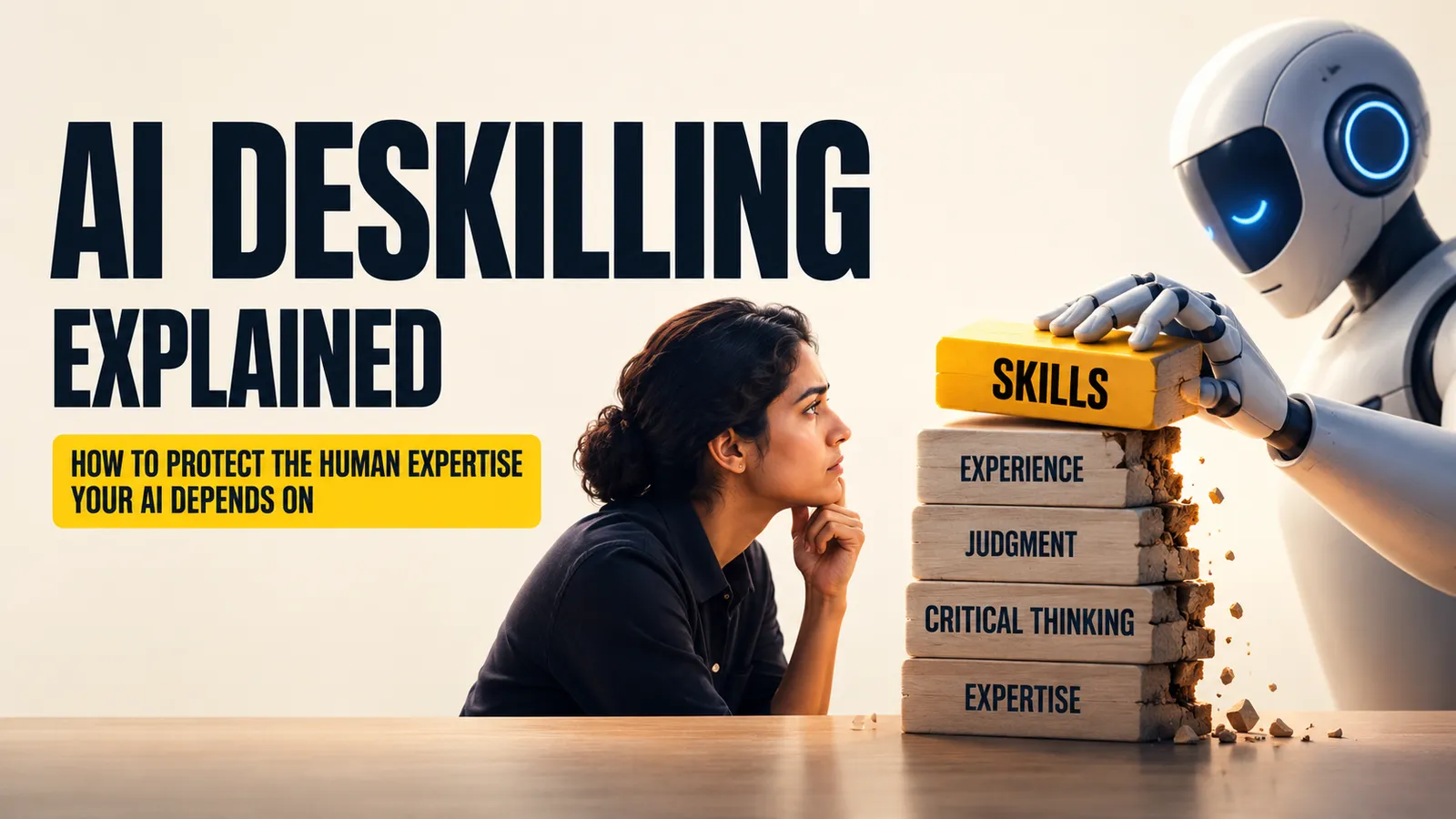
This is the uncomfortable question behind AI deskilling. A company can improve the work its employees produce today while gradually reducing the opportunities through which they learn to do that work themselves.
The danger is not that AI makes people less capable by default. It is that organizations can automate the very experiences through which expertise develops, then continue to assume that the expertise is there.
Productivity is visible. Expertise takes longer to measure.
When an organization introduces AI, the early results are often easy to count: tasks completed, hours saved, tickets resolved, reports generated and employees supported. These are legitimate measures of operational improvement. The problem begins when they are treated as evidence that the organization has become more capable in every sense.Research on AI-assisted work reveals a more complicated picture. A 2025 study published in the Quarterly Journal of Economics, examining 5,172 customer-support agents, found that access to a generative AI assistant increased productivity by 15% on average. Less experienced workers experienced particularly strong improvements in speed and quality, and the researchers found evidence that AI assistance helped workers learn and improve their English fluency. This is an important counterpoint to the idea that AI assistance necessarily weakens human capability. In the right conditions, it can help people learn.
However, improved performance while using AI does not automatically establish that someone has acquired the underlying skill. An OECD review of research on AI-assisted learning discussed an experiment involving workers learning data science with ChatGPT. Participants became better at solving tasks with assistance but did not demonstrate corresponding improvement on technical questions answered without it. The review also noted that participants developed mistaken beliefs about the tasks the AI could solve.
These findings point to a distinction every enterprise should understand: performing a task successfully with AI is not the same as becoming independently competent at that task.
The difference matters because an organization does not employ people only to produce routine outputs under normal conditions. It also relies on them when the output is unusual, the available information is incomplete, a recommendation conflicts with business reality or a system fails.
AI may make the ordinary case easier. The organization still needs people who can recognize the extraordinary one.
How expertise disappears without anyone deciding to remove it
Expertise is built through more than formal training. People develop judgment by encountering difficult cases, making mistakes, receiving feedback, comparing competing explanations and gradually learning which details matter.An experienced engineer knows that a particular error message can indicate a deeper infrastructure problem. A seasoned compliance professional recognizes when a technically complete document fails to address the actual risk. A senior financial analyst understands why two businesses with similar ratios can have very different credit profiles.
Much of this knowledge is difficult to reduce to a checklist. It develops through repeated exposure to situations in which the correct answer is not immediately obvious.
AI changes that learning environment when it routinely takes over the work that would otherwise provide those experiences. If the system generates the analysis, explains the anomaly and recommends the response, an employee may have fewer opportunities to practice the underlying judgment.
The employee is not necessarily doing anything wrong. In fact, they may be following the process exactly as designed. If their manager rewards speed, the workflow presents AI-generated answers as the default, and nobody measures independent competence, accepting the assistance is often the rational choice.
This is how deskilling can become a structural problem rather than an individual failing.
A 2025 paper in AI & Society, “AI deskilling is a structural problem,” argues that the consequences of automation must be understood in terms of how work is organized, not simply as a matter of individual users becoming dependent on technology. The question is not only what an employee chooses to delegate. It is which activities the organization removes from human work, what opportunities remain to develop expertise, and who bears the consequences when that expertise is needed again.
Consider a common career path. A junior employee handles routine cases, gradually learns to recognize exceptions, and eventually becomes the senior colleague others consult when something goes wrong. If AI absorbs most routine cases before that employee has learned from them, the company may have made the current role more efficient while weakening the path to the next one. The cost may not appear in the current quarter's productivity report. It can emerge years later, when the organization needs experienced people it has stopped developing.
The hidden governance failure: assuming competence persists
For AI governance and assurance, the central issue is not whether employees use AI frequently. It is whether the organization can still justify the responsibilities it assigns to them.Many workflows depend on an implicit assumption: because someone holds a particular role, completed the required training or received approval to use an AI system, they remain capable of supervising its outputs. That assumption deserves scrutiny.
Training records establish that training occurred. Job titles describe responsibilities. Approval records establish that someone authorized a particular arrangement. None of these, on its own, proves that a person can recognize a plausible but incorrect recommendation, challenge it with sound reasoning or take over when the AI becomes unavailable.
Nor does an employee's declining independent performance necessarily mean they have lost expertise. Tasks change, workloads fluctuate, and some forms of AI assistance genuinely improve learning. The point is that organizations should not confuse evidence of access, activity or historical qualification with evidence of current capability.
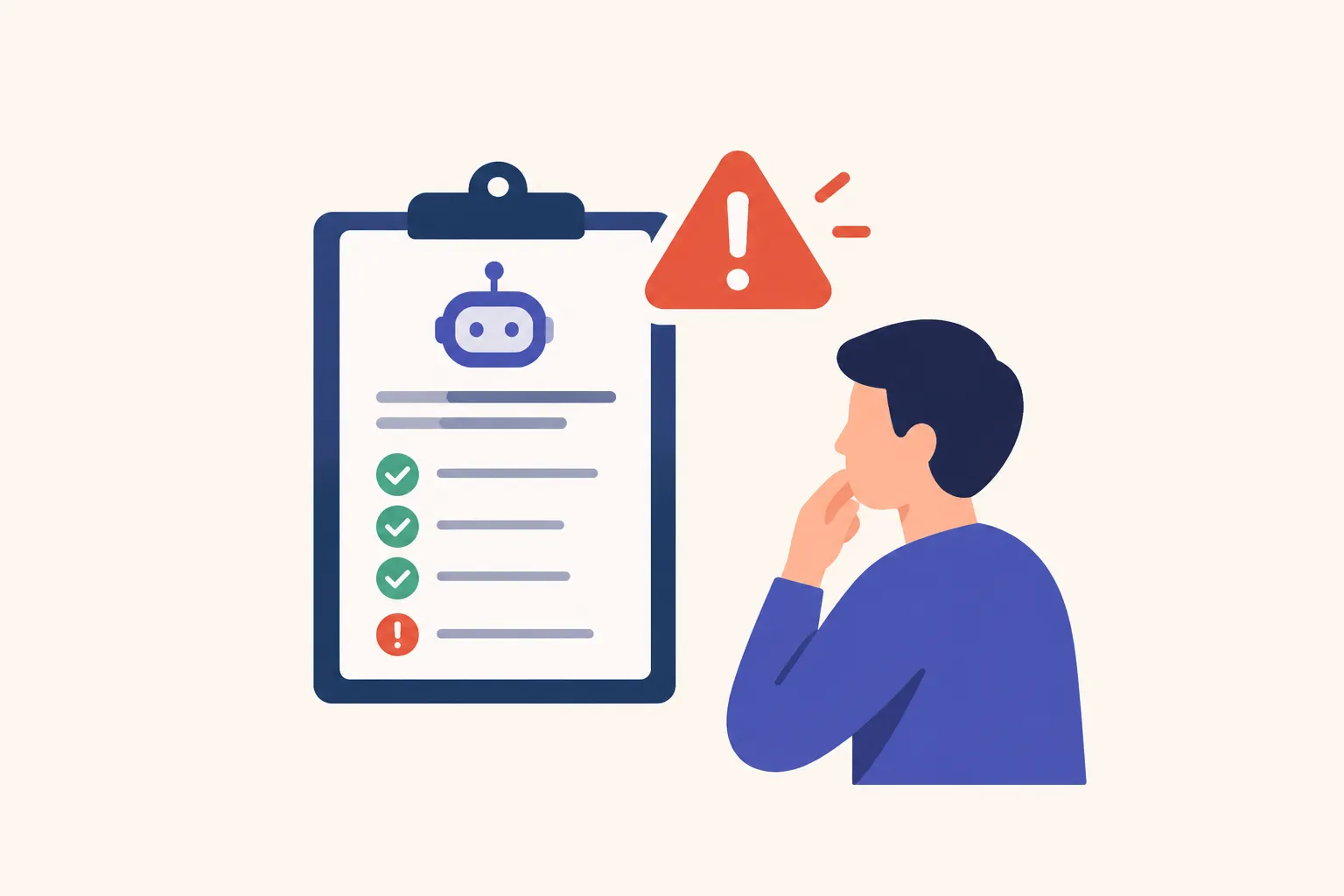
This distinction becomes particularly important in consequential workflows. If a human reviewer is responsible for challenging AI-generated credit recommendations, checking an AI-supported compliance assessment or approving a technical change, the organization's assurance depends partly on that person's ability to perform the review meaningfully.
A human approval is not a meaningful safeguard simply because a human clicked the button.
The reviewer needs enough understanding, time, access to supporting information and authority to reject the recommendation. And the organization needs a defensible basis for believing the reviewer can do the job.
A practical method: test the human capability behind the control
Organizations do not need to ban AI assistance or force employees to perform every task manually. They need to identify where independent human expertise remains essential, then build a proportionate way to verify that it is being maintained. The following method can be applied to an AI-supported process, whether it operates in finance, customer operations, software engineering or compliance.- Identify the judgment the human is expected to provide: Start with the decision, not the job title. What must the employee recognize, verify or decide that the AI cannot simply be trusted to handle? For a credit analyst, this might be identifying a weakness in the reasoning behind a recommendation. For a compliance reviewer, it might be recognizing that the available evidence does not support the conclusion. If the answer is merely “review the AI output,” the control is not sufficiently defined. Specify what a competent review must accomplish.
- Establish a baseline of independent capability: Before making AI assistance the default, determine what competent performance looks like without it. This does not require a lengthy examination for every employee. It might involve a sample of representative cases, a practical exercise or a review of how someone handles a known exception. The baseline should reflect the actual judgment required by the role, not the employee's ability to recall policy wording or navigate an AI tool.
- Test whether capability persists under realistic conditions: Periodically select cases that test the relevant judgment. Include ordinary work, ambiguous cases and examples in which an AI recommendation is plausible but incorrect. Where appropriate, compare the employee's reasoning with and without AI assistance. The purpose is not to catch people out. It is to discover whether the workflow is developing human expertise, preserving it or quietly replacing the practice through which it is maintained. A useful test is to ask the reviewer to explain why a recommendation should be accepted, rejected or escalated. A correct answer without a defensible explanation may not provide enough assurance for a role that requires independent judgment.
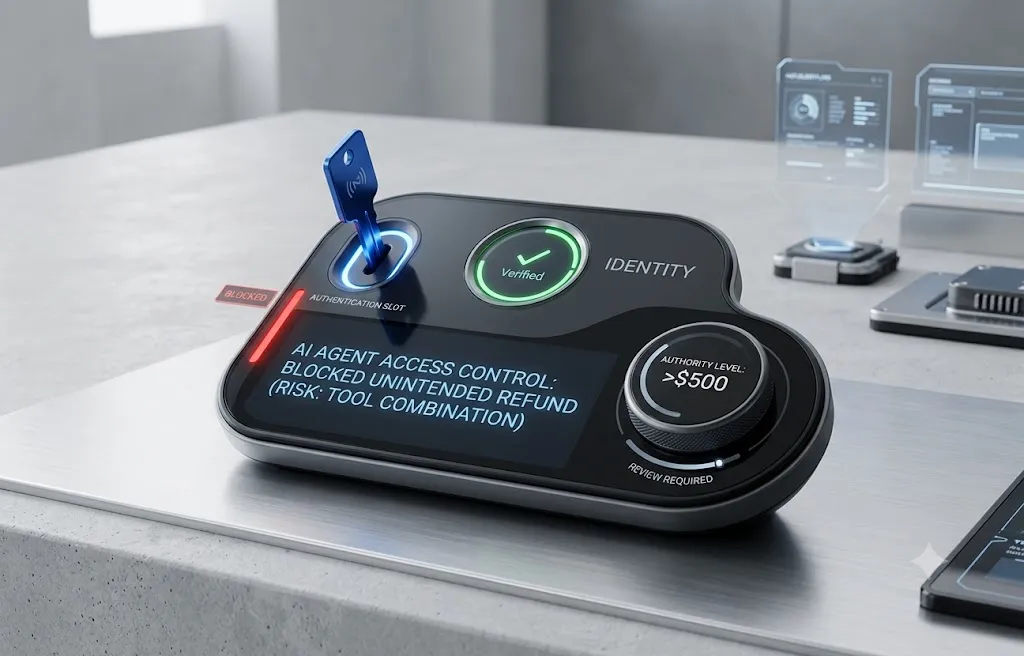
- Connect capability findings to responsibility: If the evidence reveals a gap, determine what it means for the control. The response might be supervised practice, targeted training, a second review, a narrower approval authority or a redesign of the workflow. The right action depends on the consequences of an incorrect decision and the nature of the gap. An employee should not automatically lose authority because they struggle with one test. Equally, a historical training certificate should not override evidence that a critical skill needs attention.
- Preserve the basis for the decision: Record what capability was required, how it was assessed, what the assessment established, who reviewed the result and what action followed. Reassess when the role, AI system or decision's consequences change materially. This creates an assurance trail that connects the human control to evidence, rather than relying on the existence of a training policy as proof that the control works. The method is deliberately risk-based. A writing assistant used for low-consequence internal drafting does not need the same level of independent capability testing as an AI-supported process that influences credit decisions or regulatory obligations.
What leaders should measure instead of productivity alone
Organizations do not need a new metric for every possible human skill. They need to stop treating output volume as a complete picture of workforce capability. For AI-supported work where human judgment matters, leaders should ask a different set of questions alongside conventional productivity measures:- Independent performance: Can employees still complete or evaluate a representative sample of consequential tasks without AI assistance?
- Exception handling: Can they identify when an output is plausible but wrong, incomplete or inappropriate for the situation?
- Reasoning quality: Can they explain the evidence behind accepting, rejecting or escalating a recommendation?
- Recovery capability: If the AI becomes unavailable or must be taken out of service, can the organization continue the essential work safely?
- Skill development: Are less experienced employees gaining the judgment required for more senior responsibilities, or are they learning only how to supervise generated outputs?
Leaders should also examine the incentives they have created. If employees are evaluated almost entirely on speed and throughput, asking them to spend additional time verifying AI outputs or practicing difficult cases may conflict with the performance system. Telling people to “keep their skills sharp” will not solve a problem the workflow itself continually reinforces.
When AI changes, the human control may need to change too
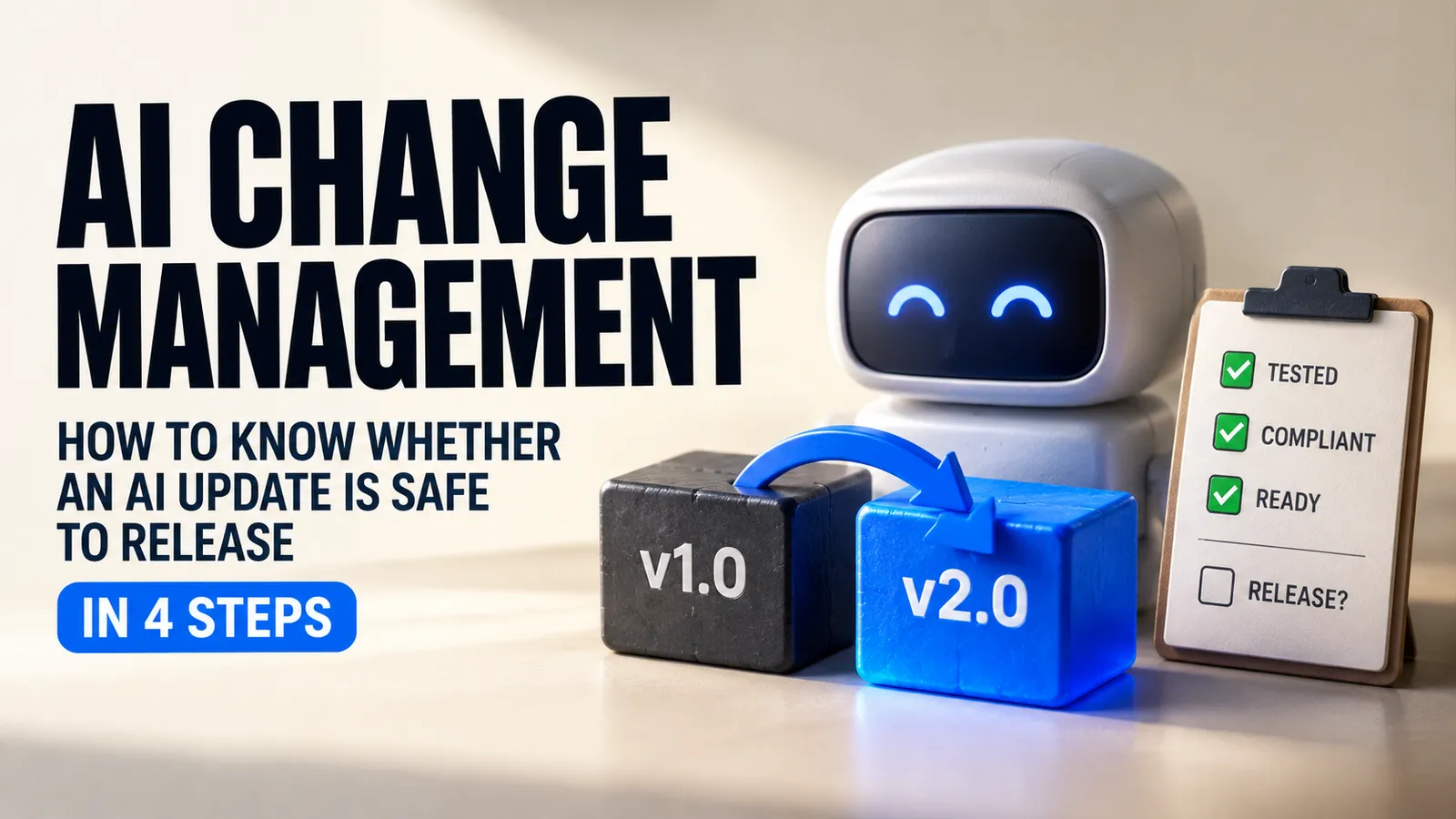
There is another reason to treat capability as part of AI assurance: the task people are expected to supervise can change.A new model may produce different kinds of errors. A prompt change may alter the reasoning or information presented to a reviewer. A new data source may introduce unfamiliar exceptions. A workflow change may give AI a greater role in a decision that previously remained with a person.
These changes do not automatically mean that employees have lost their skills. They may mean that the skills required to supervise the system have changed. Suppose a compliance team has approved a workflow in which an employee checks AI-generated summaries against source documents. Later, the workflow changes so that the AI also recommends how ambiguous cases should be classified. The reviewer is now expected to exercise a different kind of judgment, even if the job title and training record remain unchanged.
The organization should reassess both sides of the control: whether the AI-supported process still behaves as expected, and whether the human review remains appropriate for the decisions now being made.
This is where continuous AI assurance becomes relevant. KlaritiQ connects AI initiatives, risks, evidence, ownership, approvals and recorded decisions so an organization can maintain a clearer account of what it has assessed and authorized. It does not measure an employee's cognitive capability or independently certify that someone remains competent. That assessment requires a defined human process, appropriate tests and accountable reviewers.
The value of assurance is making sure those judgments do not disappear into informal assumptions. If a change alters what a person is expected to supervise, the organization should be able to establish what changed, who assessed the implications, what decision was made and what evidence supports that decision.
The question is not whether AI makes people better or worse
Both outcomes are possible. AI can give less experienced employees access to guidance they would otherwise lack, help them learn unfamiliar tasks and free experts to concentrate on harder problems. It can also remove the repetition, friction and exposure through which certain forms of expertise develop.The outcome depends on how the work is designed, which tasks are delegated, what employees practice and what the organization chooses to reward. The evidence does not support a universal claim that AI inevitably deskills its users. It does support treating skill retention and independent judgment as questions worth measuring rather than assumptions worth ignoring.
For enterprise leaders, the important distinction is between a system that makes employees more productive and an operating model that leaves the organization capable of handling the situations its AI cannot.
The next time an AI initiative delivers a productivity gain, ask one more question before declaring success:
What expertise are our people developing, what expertise are they no longer practicing, and how would we know if the difference mattered?If the organization cannot answer that, it may understand what its AI is producing without understanding whether the people responsible for its safe use are prepared for the day it gets something important wrong.