

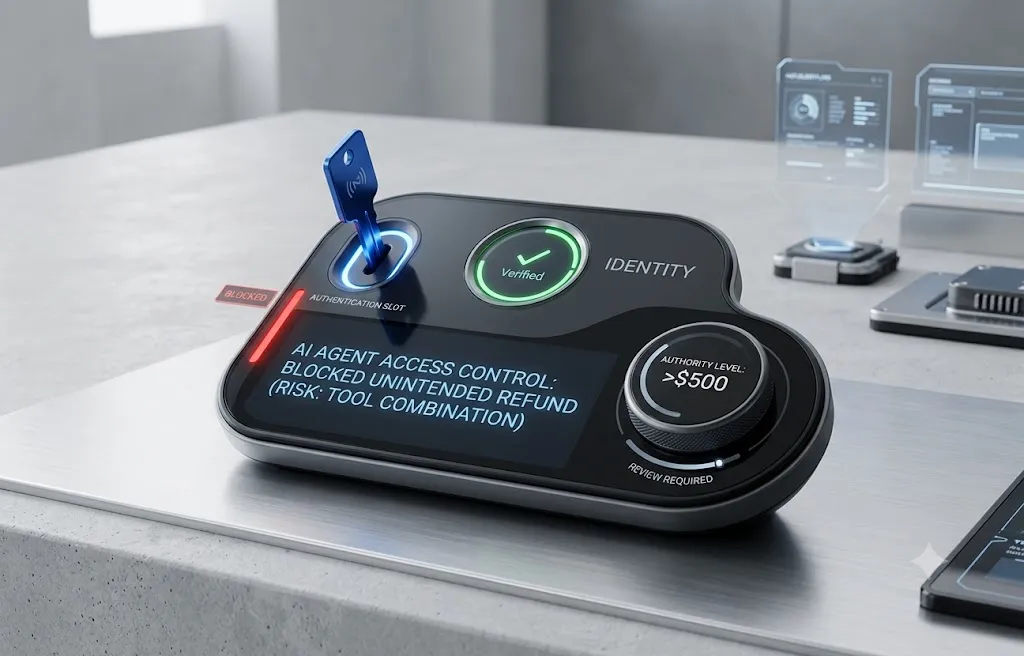



At 10:17 a.m., your security team detects an unexpected API call from the AI assistant your customer support team uses to retrieve account information and initiate refunds. The call is unusual enough to investigate, but nobody knows yet whether it represents a legitimate operation, a configuration mistake or something more serious. While engineers trace the request, security wants to restrict access and operations needs to know whether switching off the assistant would interrupt refunds already in progress.
Someone opens the AI inventory, expecting it to answer the questions the team cannot afford to leave unresolved: what can this assistant access, which services can it act through, and who needs to be involved in containing the problem?
The record looks complete. It identifies the model, names the vendor, lists the department responsible and links to the original assessment. But that assessment describes the assistant as it existed before last month's integration, when an engineer connected a new internal service and expanded its permissions to support an additional workflow. The inventory was never updated, so the team is now investigating a system whose current capabilities are not reflected in the record it is relying on.
That gap changes the nature of the incident. The team cannot yet establish the boundaries of the assistant's access, so it cannot confidently determine what information might have been exposed or which other workflows could be affected. Revoking the relevant credentials might prevent further activity, but without understanding their dependencies, the team could also interrupt a legitimate business process. Every decision now requires information that somebody should have been able to find before the alarm sounded.
This is why AI inventory management matters beyond governance documentation. An inventory is supposed to reduce uncertainty about the systems an organization operates. When it describes yesterday's system instead of today's, it can give decision-makers the confidence of having documentation without the practical ability to use it.
An inventory can be accurate and still be dangerously incomplete
Most AI inventories begin with a reasonable question: where is our organization using AI?The difficulty is that AI deployments do not remain still while the inventory is being maintained. A team enables an AI feature in an existing software product, a developer connects a model to an internal database, or an approved assistant acquires permission to perform a task it could not previously perform. A pilot might become part of a customer-facing process without anyone deliberately deciding that its risk profile should change.
The original record may still accurately describe the model, its vendor and the purpose for which it was approved. What it no longer captures is the system that has emerged around it.
The distinction matters because a model is only one component of many production AI deployments. Its operational capabilities also depend on the data it can retrieve, the identities it uses, the services it can call and the actions those services permit. A change to any of these components can alter the consequences of a failure without changing the model name that appears in the inventory.
The National Institute of Standards and Technology (NIST), in its AI Risk Management Framework Playbook addresses this through GOVERN 1.6, which calls for mechanisms to inventory AI systems in line with organizational risk priorities. Its suggested actions include defining who maintains the inventory, which systems must be covered and what information should be recorded. NIST describes an inventory as an organized collection of information that can support both individual queries, such as when a model was last refreshed, and broader questions about deployed systems and the populations they affect.
The practical implication is more demanding than simply registering every model. An organization needs to retrieve information about its AI estate that remains useful for the decisions it may have to make.
NIST's framework and Playbook are voluntary resources, not a universal legal checklist. They nevertheless offer a useful foundation for organizations trying to understand how their AI systems are deployed, maintained and governed. The operational test is whether the information remains trustworthy when a system changes or something goes wrong.
The part of the system that causes trouble may not be the model
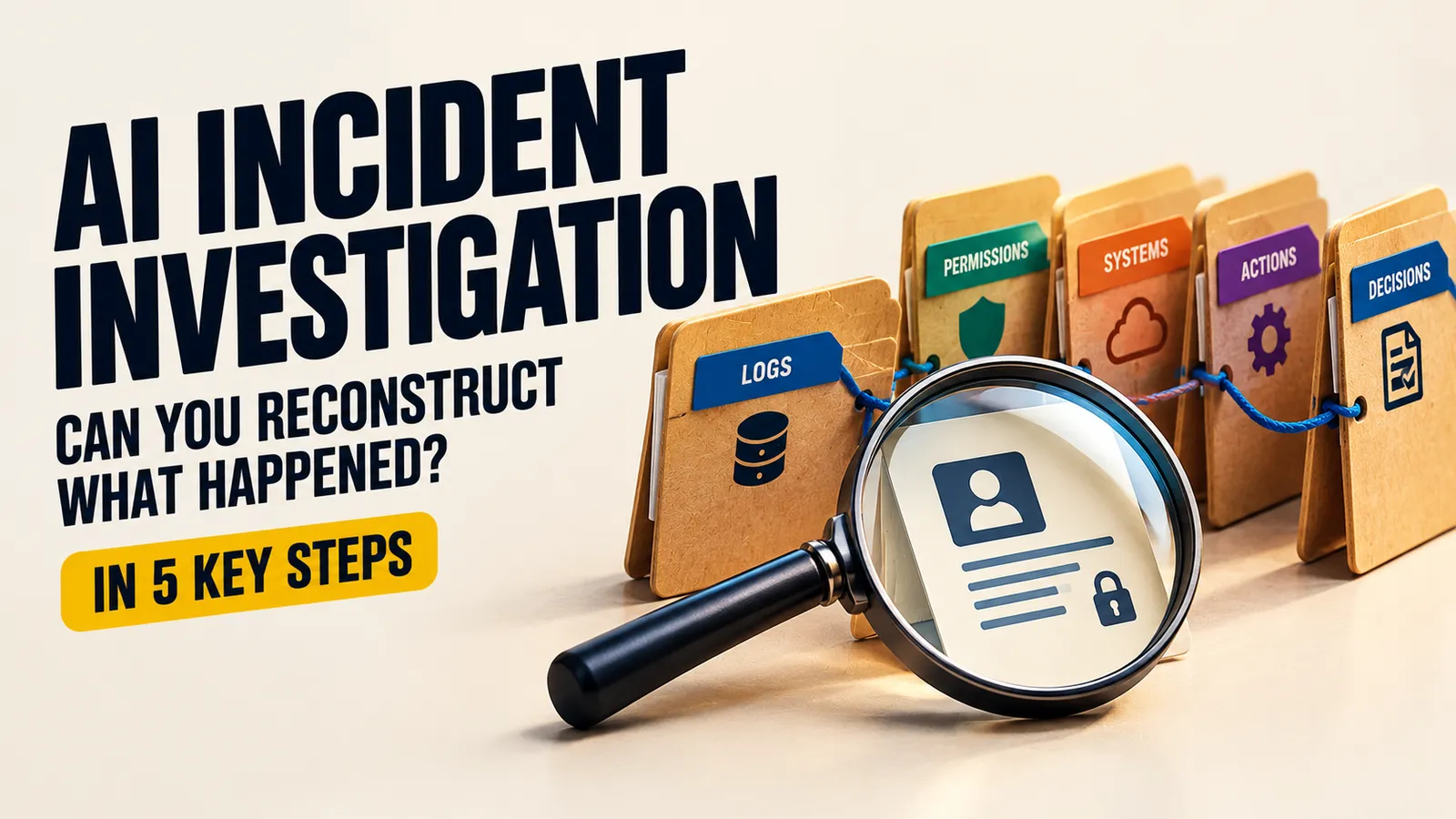
Consider what happens when the customer support assistant in our opening scenario makes an unexpected API call. Investigators may need to examine the assistant's application logs, the identity used to authenticate the request, the permissions granted to that identity, the destination service and the records showing what happened after the request arrived.No single entry labelled "customer support assistant" can answer all those questions. The investigation depends on connecting the AI application to the technical identities and downstream services through which it operates.
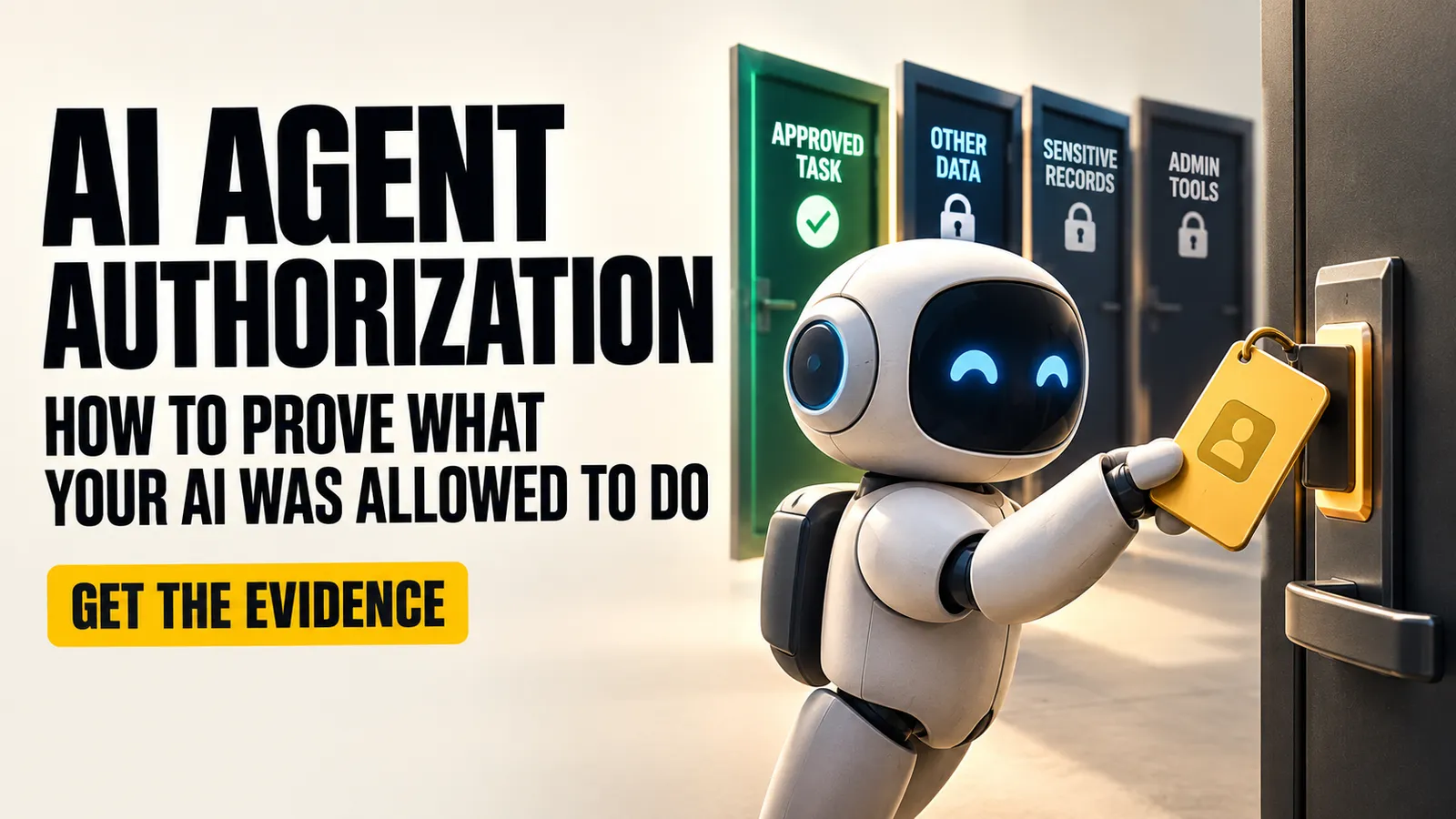
This is a problem that traditional asset inventories can miss, particularly when AI introduces service accounts, API keys, OAuth tokens, orchestration credentials or other non-human identities. These identities can grant a system access to resources beyond the environment in which the model itself runs. If one is misused, responders need to establish what it can reach, which business functions depend on it and how access can be revoked.
Robert Saul, General Manager of the AWS Customer Incident Response Team, explores these challenges in Incident Response Preparation for AI Systems, a presentation hosted by NIST. His discussion highlights the importance of mapping AI systems to their identities, permissions, business functions and incident-response procedures.
The consequences become easier to understand when you consider the choices facing the incident commander. Suppose the assistant uses a shared service account to retrieve customer information, while another production workflow relies on the same credentials. Revoking the account might contain the suspected problem, but it could also disrupt the second workflow. Leaving it active could preserve business continuity while allowing potentially harmful activity to continue.
There is no universally correct action that an inventory can select on the team's behalf. The decision depends on the evidence, the potential exposure, the available containment options and the organization's tolerance for further harm. What the inventory can do is make those decisions better informed by recording the relevant permissions, dependencies, responsible people and approved response procedures before they are needed.
That is the difference between knowing that an AI system exists and understanding enough about its operating environment to respond when its behavior becomes a concern.
Why inventories fall behind the systems they describe
In most organizations, an inventory becomes outdated through ordinary work rather than one dramatic failure. A developer adds an integration to resolve a product limitation. An engineer broadens a permission because the existing scope prevents a feature from working. A vendor releases a new model version, or the business starts using an approved assistant for a different task. Each change is made to solve an immediate problem, while the inventory remains tied to the original approval.The people involved may all be acting reasonably within their responsibilities. The engineer wants the feature to work, the product owner wants to deliver it, and the risk team may have reviewed the deployment carefully when it was first introduced. The failure lies in the absence of a reliable connection between the change and the assessment that justified the system's use.
A quarterly review can eventually reveal that the record is stale, but it cannot guarantee that the record is accurate at the moment a material change occurs. Nor is asking the owner to update more spreadsheet fields enough if that owner never learns that a new integration or permission has been introduced.
The more useful approach is to identify the changes that could invalidate an existing assessment and establish what should happen when they occur. A new data source, expanded permissions, a changed business purpose or a materially different dependency may require someone to reconsider the system's risk, update its documentation or obtain approval. A cosmetic change may require nothing beyond a record update.
This does not mean every technical change should trigger a full reassessment. That would create unnecessary work and encourage teams to treat reviews as administrative hurdles. The objective is to make the distinction between material and immaterial changes deliberate, explainable and accountable.
For each material change, the organization should be able to establish what changed, who assessed its implications, whether the previous decision still holds, what corrective action was required and where the supporting evidence can be found.
An inventory then becomes part of an ongoing control process rather than a snapshot that is refreshed whenever somebody remembers to open it.
What an incident-ready AI inventory needs to tell you
Start with a system whose failure would have meaningful consequences for customers, sensitive information or business operations. Instead of asking which fields your inventory should contain, work backwards from the questions the response team would need to answer during an investigation.- Establish the system's actual capabilities: Record its business purpose, model or provider, deployment status, technical owner and business owner. Then document the identities it uses, the permissions granted to them, the integrations through which it operates and the important actions it can perform. Where credentials are involved, the inventory should point to their secure management location and the approved revocation procedure; it should never store secret values directly. For the customer support assistant, this means establishing whether it can only retrieve account details or whether it can also initiate refunds, modify customer records or access other internal services. Those differences determine what investigators need to examine when an unexpected action occurs.
- Map the dependencies and the consequences of intervention: Identify the applications, data sources, business workflows and services that rely on the AI system or share its credentials. Document the likely impact of suspending an integration, revoking a permission or disabling the system, including any known fallback process. This does not prevent emergency containment when it is necessary. It gives the responsible people a clearer picture of the consequences they may need to manage.
- Make the evidence discoverable: An incident investigation may require API gateway logs, identity-provider events, application records, model-version history, tool-call records or workflow histories. The inventory should identify which evidence sources are relevant, what each source can establish, who can retrieve the records and how long they are retained. The distinction between available and useful evidence is important. An application log might show that a request was received without confirming whether the downstream action succeeded. A record stating that logging is enabled does not prove that the necessary events were captured, retained or made accessible to investigators. Those assumptions need to be tested.
- Identify who has authority to act: Record who can revoke credentials, suspend an integration or disable a workflow, who assesses the business impact and who can authorize a return to service. These responsibilities should be established in advance, with escalation paths that work when the primary owner is unavailable. The inventory supplies context for human decisions; it should not silently substitute its own judgement for the people accountable for the outcome.
Test your inventory before an incident tests it for you
Choose one important AI system and bring together its business owner, an engineer who understands its integrations and someone responsible for incident response. Give them the current inventory and ask them to work through a realistic failure scenario without relying on memory or searching through old emails, chat messages and approval documents.Can they establish what the system is authorized to do today, which identities and permissions enable those actions, what other workflows could be affected, and where the evidence needed to reconstruct an event is stored? Can they identify who would authorize containment and explain what the available options might disrupt? Finally, can they show what has changed since the last assessment and whether those changes affected any previous risk decisions?
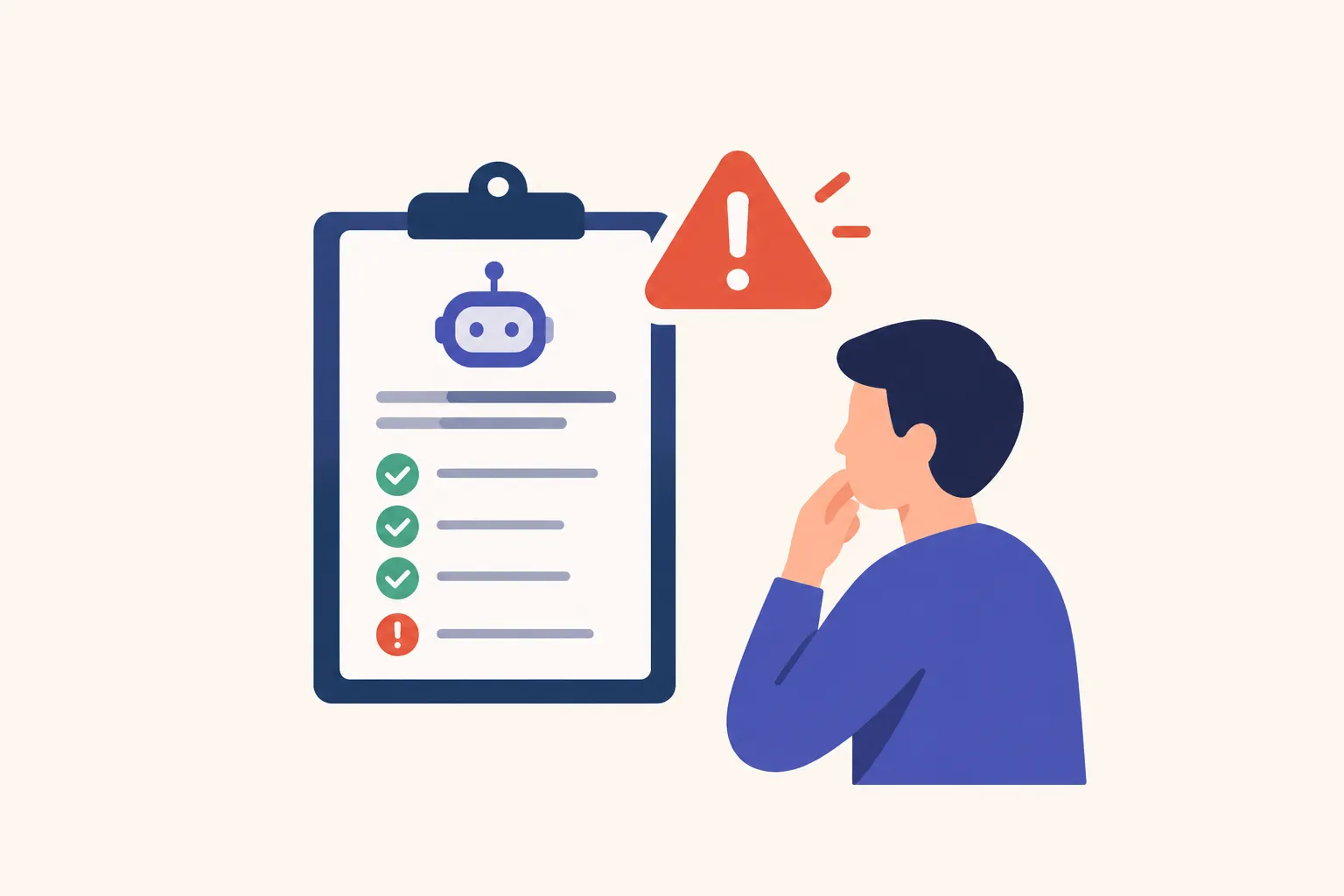
For each answer, mark the information verified, stale or unknown. An answer should count as verified only when the team can point to current, credible evidence; familiarity with the system is not a substitute for checking the relevant record.
The unknowns are often the most valuable result of the exercise. If nobody can identify the current permissions, the organization has discovered a concrete gap in its ability to investigate or contain a problem. If the logs exist but the response team cannot access them, the gap is different and needs a different corrective action. If nobody knows who can authorize suspension, the issue is one of decision authority rather than documentation.
Assign each gap an owner, define the action needed to close it and track the work to completion. Repeat the exercise after material changes and test the response procedures through an incident simulation. The objective is not to make the inventory appear complete; it is to establish whether the organization can use it under pressure.
This exercise does not prove that the AI system is secure or that every incident can be contained without harm. It tests something narrower but essential: whether the organization can find the information needed to understand what happened, assess the possible consequences and make an informed decision about what to do next.
Measure whether the inventory is useful, not merely complete
Leadership teams often want a count of registered AI systems because it offers a simple view of adoption. That number is useful for understanding the size of the estate, but it says little about whether the organization is prepared to respond when one of those systems changes or fails.More meaningful measures examine the quality and usability of the records behind that count. What proportion of critical systems have verified business and technical owners? How many have current permission and dependency records? Can response teams retrieve the relevant logs within the time available to investigate? Have containment procedures been exercised? How many material changes are awaiting impact assessment, and how long do identified gaps remain unresolved?
These measures need careful interpretation. A well-documented system can still have excessive permissions, and a response plan can look convincing on paper while failing during an exercise. The inventory should therefore be tested alongside the controls and processes it describes.
The goal is not to eliminate every unknown.
It is to identify consequential unknowns early enough that the organization can resolve them before an incident turns them into urgent decisions.
From AI inventory management to continuous assurance
An inventory gives an organization a record of the AI systems it knows about. Continuous assurance addresses the harder question: what happens to that record, the associated risk assessment and the decisions already made when the system changes?Each event needs to be evaluated in context, with a human deciding what the findings mean, which actions are required and what evidence must be retained. The working sequence is:
Change or incident signal → impact assessment → human decision → action → evidence.The challenge is keeping those steps connected. If the assessment lives in a spreadsheet, the decision in an email, the corrective action in a project-management tool and the proof in a shared drive, somebody must reconstruct the chain whenever a reviewer asks what happened and why the organization responded as it did.
KlaritiQ is designed to connect this assurance work through assessments, risks, accountable owners, decisions, corrective actions and supporting evidence. It does not replace runtime security monitoring, independently determine whether an event is legally reportable or automatically contain an AI system. Instead, it provides an operating layer for coordinating and substantiating the work that follows a material change or an established incident signal.
That distinction matters because detecting an event, understanding its implications, deciding how to respond and proving that the agreed action was completed are different responsibilities. An AI inventory can support all of them, but only if its information remains connected to the system as it actually operates and to the people responsible for its use.
Return to the incident at 10:17 a.m. A useful inventory would not magically tell the team whether a customer was affected. It would help investigators establish the assistant's current access, trace the relevant requests, identify affected dependencies and reach the people authorized to make containment decisions. The team would still need to investigate the evidence and exercise judgement, but it would not have to begin by discovering how the system works.
That is the standard worth aiming for. Not an inventory with every row completed, but one that helps the organization understand its AI systems when the answers matter most.
Ask your team to test one critical AI system this week: can they establish what it can access today, what depends on it, where the relevant evidence lives and who can act if something goes wrong? If the answers depend on memory or a search through old documents, you have found a gap worth closing before the next incident.